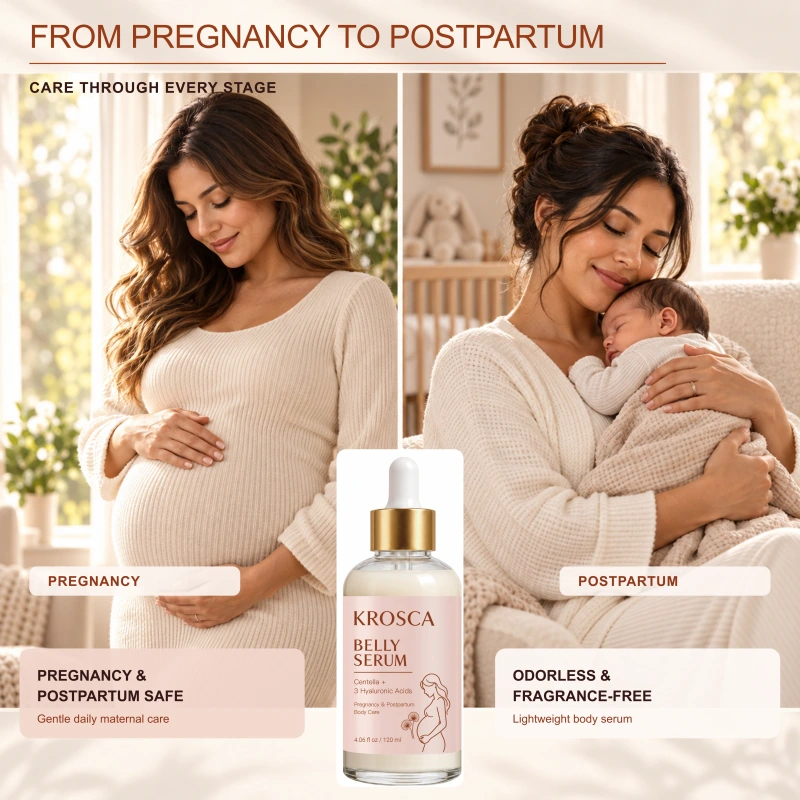
First Trimester Belly Care: What You Actually Need
Short answer: not much. Your belly is not stretching yet, so the "prevent stretch marks" industry has nothing to sell you in the first twelve weeks — though it will try.
What does change in the first trimester is the skin itself.
What is happening to your skin
- Oil production shifts. Some people break out for the first time in years; others dry out.
- Sensitivity increases. Products that never stung can suddenly sting.
- Scent aversion. Strong fragrances become unbearable for many people, which is a good reason to drop them early.
- Fatigue. The routine you imagine at week 6 is not the routine you will keep at week 9.
What to do now
Keep it simple. A fragrance-free cleanser, a moisturizer, sunscreen in the morning. That is the whole first trimester.
Start the habit, not the product. If you want to use a belly product later, get used to applying something after the shower now. The habit is what survives.
Stop the actives that need stopping. Retinoids and high-strength acids are the usual conversation with your doctor. Do it early, not at week 30.
Drink water and sleep. Unglamorous, and it shows in the skin.
What can wait
- Buying a special belly product. There is no evidence that starting at week 6 beats starting at week 20.
- Expensive "firming" treatments.
- Anything with a strong fragrance, if you are already sensitive to smells.
When to start a belly routine
Around the time the belly starts to feel tight, usually weeks 16–20. That is when hydration starts to matter for comfort, and when the skin begins to stretch for real.
You do not need a different product for the first trimester. You need one you tolerate, and the habit of using it.